Showing posts with label big. Show all posts

Saturday, September 18, 2021

Tumult Unceasing!

now finished: The Iliad by Homer 

 I have finally read The Iliad.

Wait, no. I have finally! read The Iliad! 

The epic thing, pages and pages and pages of hexameter, Books 1-24. Of which, I might add, I deem at least two unnecessary. We could easily do without the early on one that reads like the Old Testament, droning on and on about so-and-so and so-and-so and the son of so-and-so, just name after name after name. No one cares*, Homer. (Same to you, OT prophet scribes.)  And, that Book 23, fever dream, opponent-dragging, don't-call-it-a-climax, don't-call-it-a-denouement chariot race is just....what? Who took over the directing of this episode? Tarantino? That Enter the Void guy**? 

Anyway. 


I liked reading The Iliad! Did I mention it's epic? So violent by the way, much like a Game of Thrones episode. The various bone-splitting, tendon-slicing, helmet-crushing, brain-spurting injuries and kills are gruesome and vividly rendered. 

Here's what I didn't know: that there was so much Olympian gods chicanery involved in this. I really had spent four decades (or, three, I suppose) thinking it was more realistic than magical realism. Like, wheeeeeeee! gods just routinely step into our lives and do stuff. The whole (epic!) thing is honestly so similar to the impending biblical Christianity  sensibility of war-fate-storytelling that I don't understand how anybody believes in any one monotheism god as opposed to all-those-pagan-gods. It's all part and parcel.  Humans are so weird. 

On that note, one time Zeus points out how terrible humans are. Zeus. Zeus! The jerkiest of jerks! He has this to say: 

"For there is nothing more wretched than mankind / of all things that breathe and creep upon the earth. "              -- Book 17 

You are not kidding, son of Cronus. 

Besides Achilles hanging around his ships lamenting how things are, and everybody but everybody considering women "prizes" to be won, taken, and stolen, the other main thing that happens throughout The Iliad are these wandering metaphors. "Then the Trojan warriors came," he'll say, "like a pack of wolves, who trot up the mountain, you know the kind I mean, with snouts toward the moon, like a lost wandering beast who knows its meal waits just around the bend, the kind of meal he can sink his teeth into, a wolf's tooth, the kind you wear around your neck; up the mountain they went  like these wolves, as a clan of mystic seekers whose blood scent leads them on, like a man who has lost his only friend..."***   It goes on like that for a while, and then eventually the sentence ends and we can find out what the Trojans did. 

Why did I read The Iliad now?  (Besides the obvious why not, of course.) Well, lately I have been realizing that everyone seems to remember a whole lot more of the Greek mythology we read in junior high than I do. See, e.g., any given episode of Jeopardy! I was like WHY DO YOU ALL KNOW ALL THIS STUFF. Granted that it is definitely not because y'all have sat down and read The Iliad, I know that, but I am the Literary One, so I have to do the reading. I decided to invent an Ancient Greek Things class for myself and I have added some mythology and gods and classic epics books to my nearest stacks and I am filling in some knowledge gaps. 

Also it's college football season, which is a great time to get hyped when "A dark cloud of Trojans now closes round..."  (Book 16)

The Iliad! 

p.s. Agamemnon reminds me a bit of tr$mptydumpty. 


*yes I am aware it is of historical interest and some people care

**his name is Gaspar NoĆ©. ugh. 

***I made that up, but barely


Sunday, January 11, 2015

Not THAT A to Z ...
A Blog Book Survey

Stolen from another blog, I give you my answers to the A to Z Book Survey! I'm pretty sure all the Kidz 2-day doing the survey include images for each letter...you'll be lucky to get a handful of pictures from me! I always say, a thousand words are worth a picture...

A - Author You've Read the Most

Oh gosh, I'm not sure! Look at me already failing on the first question. But I mean, should this be the most individual books? Because that would be Dr. Seuss, I think. Number of pages? That might be Tolstoy, after only a couple of books. If we're not counting Seuss and Tolstoy, then it's gonna be either Sandra Scoppettone, Nelson DeMille, or Virginia Woolf - I've read about a dozen books from each of those three. If I weren't lazy about images (see above), I'd post a lesbian/mystery Venn Diagram to illustrate this answer.

Men Against the Sea (The Bounty Trilogy, #2)B - Best Sequel
Ooooh, good question. Oh, man, The Two Towers doesn't really count as a sequel, right, book-wise, because The Lord of the Rings is actually all one book, even though it's not. Hmmm. Well, if not that, then let's go with Men Against the Sea, the second book in the (Mutiny on the) Bounty trilogy. I adored Men Against the Sea.  I felt so impressed by and fond of the men and their boat that saved them. What a great yarn. Worth a look!

C - Currently Reading
I'm in the middle of the very good Truman by David McCullough, the current selection in my prez bios reading project, but also fiction-wise quickly blazing through Inherent Vice on the side (my second Thomas Pynchon) so then I can go see the movie.

D - Drink of Choice While Reading
So, coffee. Obviously.

E - E-reader or Physical Books?
I do not enjoy e-reading books. I have done a few, and found it convenient to be able to purchase and borrow books that way, especially when living abroad, but I do not really enjoy it. Here's to page-turning!

F - Fictional Character You Probably Would Have Dated in High School
Um. I had no idea who I was or who the people I wanted to date were in high school. With that caveat, and knowing that it would probably not have been a good idea, I probably would have dated someone truly messed up like Laurent in Therese Raquin, or at least someone very confused, like Rob in High Fidelity -- confused but who likes music. Definitely, there would have been music involved.

G - Glad You Gave This Book a Chance
Let's go with The Sisterhood of the Traveling Pants. Before it became cool for adults everywhere to shamelessly read Young Adult because staring at screens has altered their brains and attention spans so much that they can't read lengthy amounts of words on pages anymore, I worked at Borders and there was an intriguing little green paperback bestseller that I became inspired to pick up and Oh.My.Goodness do I just love the hell out of that book. Read the sequels, saw the movie, and did a bit of spreading the gospel, but just in general, if you think The Sisterhood of the Traveling Pants is for some reason not worth your time, think again!

H - Hidden Gem Book 
This has got to be either Night and Day by Virginia Woolf , which seems to get exactly no attention, even from academic/feminist/Anglophile/literary devotees but which I maintain is one of Woolf's best, or Tepper Isn't Going Out  by Calvin Trillin, which gets no attention from anyone except me and Brian.


I - Important Moment in Your Reading Life
The obvious answer would probably be something about War and Peace, no?  But I think it might actually be when the Modern Library published their list of the Top 100 books (two lists, actually, one for novels and one for non-fiction) and I printed them out and highlighted and set out on a quest, and have since continued finding quests and projects and lists of books to read and I absolutely love doing this!! (Making lists of books to read next is a hobby of mine.)

J - Just Finished
Um, speaking of lists, Smoky the Cowhorse. Among other checklists I'm working my way through: the Newbery Medal Winners. Good ol' Smoky hails from the early days of that award, the 1920s.

K - Kinds of Books You Won't Read
Twilight.

 L - Longest Book You've Ever ReadOh my goodness, so many candidates. Now I have to go check which is longest out of  Anna Karenina, War and Peace, Infinite Jest, or Dream of Red Mansions/Chamber aka The Story of the Stone....ahhh, forget it, you can go look up how many pages yourself. I like long books. Proust, I'm coming for you.

M - Major Book Hangover Because Of...P
robably Into Thin Air. I couldn't shake that for months. And all I did was talk about it, with other people under the influence from it.

N - Number of Bookcases You Own 
There are three here in this living room, with Brian's and my books. Before my Great Book Sell-Off of 2006, I had about five tall ones and then some filled in Boston...there are books in houses in Phoenix...I don't really know/care how to answer this question other than literally. I guess I co-own three.

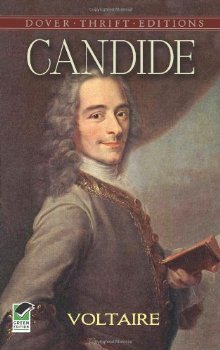
O - One Book You Have Read Multiple Times Again, besides Dr. Seuss? That would be Candide. Voltaire forever!


P - Preferred Place to Read 
Anywhere quiet.
A steady hum of sounds is OK. Jabbering, cell phone conversations, sitcoms, etc.? Not.

Q - Quote That Inspires You or Gives You All of the Feels From a Book You Have ReadObviously, Candide: "That is very well said, but we must cultivate our garden."

R - Reading RegretOther than maybe Cynthia Ozick, nothing I've actually read, but more all the time I've wasted not reading in this life.

S - Series You Started But Need to FinishSome people would say Harry Potter (I've read the first half of the first book...twice...)  Definitely not Sue Grafton's Kinsey Millhone ABCs, as I am So done with  all that. Let's see, what could it be? I haven't started Game of Thrones, really, though I did read the first few pages of the first, and that's my next-up series, I believe...I can't really think of any. Wait, Alafair Burke's Samantha Kincaid and Ellie Hatcher books are series, right? But she's still writing, and this is supposed to be a complete series. Ugh. Can I use Proust here, too?  Well, wait, actually, I think Alafair Burke is done writing Samantha Kincaid, she said, now that she's in New York. And I've read two of the Portland-set Kincaid series and need to read the third. So, that.

T - Three of Your All-Time Favorite Books(You see where I've already mentioned Candide and War and Peace multiple times, right?)
How about:
Lonesome Dove by Larry McMurtry
Pilgrim at Tinker Creek by Annie Dillard
Man's Search for Meaning by Viktor Frankl

U - Unapologetic Fangirl For...
Um.
Fangirl? Me? Ummm...
Anna Quindlen?

V - Very Excited for This Release More Than Any Other
 
Would it just be wrong to say my own book?
I'm so not the release-anticipating type with books. I've fallen behind on all my still-writing living authors (Atwood, Berg, DeMille, et. al.) I've got one word for you, kid: classics.

W - Worst Book Habit
Sitting here with a laptop on my lap instead of picking up a book?
Judging people who read trash?  (I mean real trash, like Twilight; I'm not disparaging the genres here.)
Disparaging genre fiction?
Forgetting what I've read?

You tell me; which is the worst?

X - X Marks the Spot: Pick the 27th Book on Your Bookshelf (from the upper left)
Dashiell Hammett, The Maltese Falcon

Y - Your Latest Book Purchase
Pretty sure it was at Schuler over Christmas when I picked up Night Train by Martin Amis and Game of Thrones by the inimitable conscientious objector George R.R. Martin. Have I bought anything since then? I don't think so. I tried to get Vanity Fair at our neighborhood bookstore in Lincoln Square, The Book Cellar, but couldn't find it, and at Women & Children First, I tried to get our next book group book, Eichmann in Jerusalem,  and they were sold out of that! So, back to the library...

Z - ZZZ Snatcher: Book That Kept You Up Way Too LateThis has not happened in SO long. I am a champion of falling asleep these days. I love getting sleep. I can't remember staying up reading, sucked in, since I was in Andong (Korea, in 2011)...either Freedom by Jonathan Franzen or Long Gone by Alafair Burke; I remember being up late reading both of those that year.

What a fun survey!

How about you?


Wednesday, January 29, 2014

It's a Warren G. thang

now finished:  The Shadow of Blooming Grove: Warren G. Harding in His Times by Francis Russell
now reading: The Return of the God of Wealth: The Transition to a Market Economy in Urban China by Charlotte Ikels

now also reading: Bury My Heart at Wounded Knee: An Indian History of the American West by Dee Brown
now sick of typing: all these overly long subtitles that silly non-fiction books insist on having

THE PROJECT:  Read a biography  of every U.S. president, in order, to see where we went wrong: a project obviously conceived and named during the Dubya administration

THE PRESIDENT:  Warren G. Harding (it stands for "Gamaliel") (no, really), the 28th person to hold the office, in the 29th presidency (because we're post-Grover Cleveland here, so the numbering is all f***** up)

This was a big one! For PREZ BIOS #32, I have completed Francis Russell's tome. Just what exactly is the "shadow of blooming grove"?  I'll get to that in  a moment. (And why have I read 32 books about only 28 presidents? Because multi-volume bios. Thanks for asking.)

Here are just a few topics that I didn't know all that much about before reading The Shadow of Blooming Grove:  Edward Doheny (despite my having lived in and driven around L.A. for seven years), Albert Fall, the international disarmament conference in D.C. during the post-Versailles/League of Nation rejection years, Harding's alleged African-American ancestry and the weird attempts to reveal it to the nation, Harding's affairs (we're talking Bill Clinton levels of womanizing), and the town of Marion, Ohio.

And that's only part of the endlessly fascinating story detailed in this bio. It's a big one, to be sure, but absolutely absorbing. It covers a really interesting lifespan:  Warren (or "Wurr'n" as the author insists Harding's wife pronounced it, all Midwestern-drawl-like) was the first president to be born after the Civil War, but only about five minutes after (well, OK, seven months). And he died in the 1920s. It's mind-boggling to think about the transformation of the nation during his lifetime. And he died kind of early -- probably because the holy hell of his administration was all about to break loose, and I really think his brain just kind of imploded on him.

Fun(?) fact: He died in a hotel in San Francisco, after visiting Alaska, then still a territory.
Fun fact: As a young adolescent, he worked as a "printer's devil" in the newspaper/press office, and after a long night doing an important rush job for a client, his boss gave him a 13-em makeup rule ("the craft sign of a full-fledged printer" according to the book) and he carried it around as a good luck token for the rest of his life.
Fun fact: With friends like his, you most certainly would not need a lot of enemies.

A thankless, sorry bunch. Ohio politics, it has to be said, are possibly the foulest of them all, even more than Buchanan's Pennsylvania politics and the New York politics of Van Buren/Garfield/Cleveland et.al. Or at least the weirdest. From the madhouse, Warren emerged from his small-town newspaper, where he liked to jabber with all the folks and adopt a stray dog to hang out around the office, and ended up in the state assembly and later became a real live U.S. senator. And then, in a particularly insane Republican convention in Chicago (think: the birth of the smoke-filled rooms legend), they finagled a presidential nomination for him by making him everyone's second choice, as the story goes.

Why did Russell choose to put "the shadow of blooming grove" in the title of this book, the "shadow" being the alleged and doubted and rumored Negro/colored ancestry of the Harding family? Granted this was the early 20th century when Harding entered politics, and I think that characterizing "was your great-grandmother or wasn't she?" questions as a "shadow" more or less captures the feeling. But, it just didn't really seem to be that big of a part of Warren's political career. So why title the book that? The author sees this "shadow" hanging over the family's head as something that trailed Warren throughout his life, from schoolyard scraps to scurrilous campaign tracts, contributing to his lifelong insecurity. But I think he just didn't have as schmoozy and ambitious of a personality as the other Ohio politicians with whom he hung around (and who nonetheless propelled him to the top).

Of far more concern seem to be the affairs with a)his best friend's wife ("the long black veil of Blooming Grove," perhaps? except this particular woman wasn't ready to carry the secret to their respective graves) b)a gal who was a high school student in town when she first began to crush on him as he ran for office (ewwwww) (they didn't hook up 'til later, but ewwww).

President and puppy
However, despite his flaws (the womanizing being the main one) and despite his being completely and totally out of his element in the White House (he called it "hell" and a "prison" and asked why he was there and lamented to friends that he wanted out), our boy Warren comes off as oddly likable. He was friendly to pretty much everyone all his life, kicking back in the Marion, Ohio, newspaper office with his feet on the desk and talking to everyone in town. And he liked animals! And even better, he didn't like people who were mean to animals, and he said so. He took in a stray dog that wandered into the paper's office and it became their pet there for years, plus he had "Laddie Boy" in the White House, who was famous and popular throughout the land, and I like to think the puppy remained untarnished in citizens' eyes even as the administration went down in scandal and disgrace for the remainder of the '20s.
Harding's dog: classier than Harding?

I'm sort of proud of Warren for being at the top of the predictions when I type "Warren" into Wikipedia's search box, above Buffett, Beatty, Zevon, Ellis (I had to check who that even was-- a comics author, apparently), and Burger. I mean, Harding's definitely one of the more obscure presidents, and his most famous thing is probably Teapot Dome, which really wasn't even his doing. Truth be told, my memories of the scandal from AP History class were cloudy, so this book was a good refresher. But I think Warren was more oblivious and gullible and trusting than anything.  Albert Fall and Doheny on the other hand...they definitely got up to some stuff, in pursuit of oil and money. Outright swindling and bribery...who knows? Now, I feel a small connection to Teapot Dome, because the rock and oil fields in question are in the land of my birthplace, Natrona County, Wyoming, north of Casper.  It's a little known fact that I was born in Casper, in Natrona County Hospital (we moved to Arizona by the time I was two, though).  So I'm not opposed to anything that brings fame or even infamy to my native land...but unfortunately, as with so many of these mountains and geological formations in the West that "look like" something, Teapot Rock doesn't look all that much like a teapot. Apparently the "handle" and  "spout" have been eroded away or something.  What do you think?
Teapot Rock, of Teapot Dome fame

But it never would have become the greatest pre-Watergate presidential scandal without such a nice ring to the name, of course.

Anyway, I highly recommend this book for those who want to delve into an interesting life while learning a bit of history, indulging in nostalgia about turn-of-the-century Americana, and marveling at what politicians get up to in those smoke-filled rooms.

Sunday, June 02, 2013

He was a warmongering Nobel Peace Prize winner before warmongering Nobel Peace Prize winners were cool

recently finished: Colonel Roosevelt by Edmund Morris

This book, the third in Edmund Morris' fine trilogy depicting the life of Theodore Roosevelt, gives a reader the chance to ponder many important life questions, such as: Who have been the best among the 43 (yes, you read that right, 43) U.S. presidents? What makes a man or woman truly great?  and Why ever do we pronounce a word spelled co-lo-nel as "ker-nel"?

Well, like it or not, he is "the Colonel" through much of this third book, after the second volume about his presidency and the first about his pre-presidency life. Volume 1 won the Pulitzer and may be the best of the three in the eyes of many, but I think in the end I enjoyed Volume 3 as much if not more. Volume 2, oddly, was less interesting in a way. The actual stuff that went on during Theodore's (not Teddy!) presidency was fascinating, obviously, but it was as if Edmund had way too much source material to work with. He is at his best, I think, covering the less already documented portions of TR's life, because Edmund is a master of pulling together tidbits from the deepest archives and combining that with incredible feats of personal travel research to complete the portrait of his bio subject.

In Colonel Roosevelt, Theodore is out of the White House, where he has cajoled and coerced and manipulated my boy William H Taft into taking his place, although he ends up abandoning Taft in a totally rude and in my opinion avoidable falling out. Taft did not want to be there, and Theodore was an unnecessary jerk about it, and Taft even asked for TR's help, but Theodore was all high and mighty and hanging out with every king in Europe and, I daresay, realizing that he himself could in fact be president again in 1912, perhaps, and therefore he became unwilling to help Taft. So rude. Well, the plan failed. But it's a fascinating chapter in TR's life (and several chapters in the book).

The other highlights of Colonel Roosevelt are travel and war. Naturally, those are "highlights" in totally different ways, and only one because it happened. The other, clearly, is interesting to read about but in real life avoidable, although no one will ever learn, particularly not when they are giving the Nobel Peace Prize to warmongering presidents. This book starts with TR's amazing African safari hunt (the man is nothing if not bloodthirsty, despite his mid-life epiphany that he maybe shouldn't kill off all of the animals he would like to keep around for future generations) and I actually could have used a couple more of Edmund Morris' fabulously cute little maps that he (the author himself!) draws to show us TR's life journeys throughout the three volumes. Then, later in the book, we get yet another epic journey, again bringing his son along, this time to Brazil and uncharted areas of the Amazon rainforest to map a new river. (Not precisely "new" seeing as one of the animals in their party is felled by the arrows of Indians who may have never seen the white man before, but you know, new-to-the-Brazilian-English-Spanish-Portugese-United States-ian-etc.-maps kind of new. Unsurveyed.)  That there was one trip full of hardships, up to and including death, and also some of the most powerful bonding of human friendship to be found.

World War I is something I and many others should probably know more about. It was good to review the events leading up to it and the ways in which all of the parties (except Belgium! as TR rightly points out) were both partly justified and partly at fault in starting the giant, menacing debacle. There were some sane voices trying to solve problems in a better way, but there were also lots of voices like Theodore's, positively salivating to go to war (despite his being BFFs with the Kaiser and other Germans). Presidents Taft and  Woodrow Wilson both were interested in peace, and took major steps to try to have peace, but boy do I understand what a hard struggle that is in this violence-lusting world of ours. Quite honestly, Wilson might not have really taken the best approach, what with his whole kept-us-out-of-war being so U.S.-centered and all that it really doesn't help bring about world peace. I do wish Taft would have been able to get his world peace body of nations together, but alas, the world started slaughtering in new, ever more advanced technological ways, and TR packed off all of his sons to Europe to join the "fun." Or should I say doom?

As usual, a feeling of sadness came over me as I pushed through to the final chapters. All of my presidential bios end the same way! as I like to joke. I could see the end of TR's life approaching, so I poured a glass of wine to settle in for the demise. After three months and three books, I do know him well, and I commend Edmund for this remarkable achievement, although I still can't believe TR's sister got married in an endnote in volume 1 after her personal life, its intertwining with TR's, and her lack of marriage were major plot points for hundreds of pages before that. The endnotes are definitely something to grapple with in this bio series, almost at the Infinite Jest level. (OK, well, not quite.)  At any rate, if you're one of those who has often wondered just why the heck Theodore is carved on Mount Rushmore with those three other biggies, plunge into Edmund Morris' magnificent life's work about a life.  Overall: A -
The Rise of Theodore Roosevelt: A -  Theodore Rex: B+  Colonel Roosevelt: A 

Saturday, October 13, 2012

Trouble With the Karamazovs

now finished: The Brothers Karamazov by Fyodor Dostoevsky

Reading the same book for a month? Wishing I had more time to devote to it? Folding down pages and lamenting my lack of ability to read in the original language? Ahhh, must be time for another Big Russian Novel.

This one was destined to be anti-climactic. I've been meaning to read The Brothers Karamazov for SO long. I kept trying to persuade my Los Angeles book group peeps to read it (L.A.! That's so many cities ago!...although I need to go back there, by the way) when we had our The Books We Should Have Read in High School book group. That being said, they were probably right about not reading it at that time; I guarantee we would not have had a 100% successful finish rate. And, I no longer think of this as a Book We Should Have Read in High School whatsoever. College, maybe, though. In fact, college definitely. It's that kind of book. I probably would have loved it in college. I didn't really love it right now. I thought it was long-winded.

Now, recall that you are reading someone who absolutely loves her some long Russian novels. (And short Russian novels, but aren't there fewer of those?) Who read Anna Karenina (the whole thing! really!) in high school. Who considers reading War and Peace one of the top five greatest life experiences. Who has often pondered how Russia, much like the American South, does it -- how those two places crank out so freakin' much good literature, although they never make readers actually want to live there or anything.  Long is great. Long-winded is quite another thing. I'm not entirely sure that Dostoevsky edited this book at all.

It turns out that The Brothers Karamazov should be even longer; he was planning to write a three-part saga, but he died. This was his final novel. I kind of see him as this old man (even though he was only sixty-ish) with a life's great work behind him so everyone just lets him write and create and do whatever he wants in his art, without trying to stop/edit/finesse him to make it better. Kind of like Clint Eastwood does now. We don't really demand anything of Clint anymore; we just take what he gives us and continue to praise his genius. I think Dostoevsky was kind of rambly in the Brothers but no one cared. Why not? Just let it all wash over you. (No word on whether he kept an empty chair around to stimulate discussion.)

So, there are a few great things about the book. One, he has this crazy ridiculous insight into the human mind. So you can actually get through the book on that alone, marveling at the way these flawed characters are depicted and delighting in some of his pithy summaries of thought processes that are a bit like Kerouac's in the way they make you think, "Wow, he finally said what my brain has been trying to say for twenty years."

But then you kind of want the plot to go somewhere instead of reading five mystical pages about what place love and Christ and death have in our jacked-up world...

Eventually the plot goes places, of course. I frankly think the book got really good around page 500. (I am aware that this is FAR too much to ask of, oh, most readers.) And despite the fact that SO few people read this blog and even fewer are planning to ever read The Brothers Karamazov, I just can't offer up spoilers, which means I can't talk about huge, gigantic, major, point-of-it-all happenings like "whodunnit" and why.

I can say that Alyosha was annoying at first, but then I really got to like him, once I kind of understood him. Dmitri seems like a big jerk, but once you tap into his confusion you start to understand him a little better, too. Ivan is presented as all dark and dismal and atheist but I kind of liked him more in the first place than I did the others.

Another great thing about this book is that there are definitely great quotes. Like:

"...you, I, all of us are in a state of aberration, and there are ever so many examples of it: a man sits singing a song, suddenly something annoys him, he takes a pistol and shoots the first person he comes across, and no one blames him for it."   --p. 528, ISBN: 1-59308-045-X

He wrote that line in 1879, kids!

Speaking of the edition I read, I would really like it if the Barnes and Noble Classics edition hadn't told me a major plot point on the back cover. I mean, I guess everyone is just kind of expected to know what the book is about, but I am still of the belief that anything that happens after three hundred pages should not be on the back cover, period.

Basically, this book is really different from Crime and Punishment and Notes From Underground, my two previous Dostoevsky endeavors, both of which I loved. This book is more winding, more overtly philosophical about Big Questions (is there a god? what is family? what is love? death? society? justice? and so on), more pointless in some ways (Ilusha and Kolya Krassotkin....why? just, why?), and definitely more long-winded. Which, I already mentioned that.

However, I will say one thing: this book would be really hard to fake. The experience of it is quite different from its fame and all you hear about it in the world. I think one could fake The Scarlet Letter or Moby Dick or Hamlet a lot more easily. The Brothers Karamazov is really famous, but what do we know about its details in the world? It's about a family. With brothers. It's big and Russian. It's full of ideas and peasants and society. 'Cause it's Russian. With brothers. This, my friends, barely scratches the surface. As much as I think Moby Dick is utterly wasted on high school and college students and has so much more to say to adults who are disillusioned with life in the workplace, I still think the famous ideas about The Whale match the book itself, more or less. Not so with this book. So that's my advice to you: if you are one of the millions who has not read this book, don't try to fake it to impress that potential date at the bar who adores it. You will be called out faster than you can say Smerdyakov.

Thursday, May 24, 2012

The Island of the Day Before

now finished: The Island of the Day Before by Umberto Eco
Umberto Eco was one of the sure bets in my A-to-Z Literary Blog Project to make the top half, in which I am revisiting my top 13 authors by reading another book of theirs. The book I read for 'E' is for Eco during the original project, The Name of the Rose, was so perfectly what I expected it to be -- including interesting and good, along with much more -- that I became convinced he would continue to be perfectly what I expected of him in his other works. I had always thought I'd read Foucault's Pendulum  next, it being so "the other book by Umberto Eco" famous and all, and I've even touched it many a time, but instead I am in hanging out in Phoenix and my local branch of the library had The Island of the Day Before on the shelf and I was there and could have put a request for the Pendulum to be transferred from another branch but The Island of the Day Before was about a man shipwrecked on a ship, and it was blue...so blue...I like blue things...

OK, so this was a strange book.

I can truly appreciate the Goodreads reviewer who referred to its "150 page screening process to weed out the unworthy."  I really did not know what was happening for quite some time and I wasn't sure if I was enjoying the book at all, but it ends up getting kind of trippy and good, at least in parts.

I know, I know, it doesn't sound like a very enthusiastic recommendation, and there are so many of you who are all like, "I ain't gonna work to read a book" and that's fine, just go on back to your Hunger Games, now, really. Run along. Umberto Eco melds philosophy and whimsy and wink-wink cleverness and social criticism and story and literary allusions (including to himself) and some weirdness and some history and god knows what all else. There is no "OMG I literally hunger for these games" here.

Sometimes The Island of the Day Before is straightforwardly clever, such as when Roberto della Griva's father advises him, "Well, war's an ugly animal, that's sure. Anyway, my son, never forget: always be good, but if somebody comes at you and means to kill you, then he's in the wrong. Am I right?" - p. 51 

Sometimes it's wry:  "He was now so sure an Intruder was on board that his first thought was this: Finally he had proof he was not drunk. Which is, after all, the proof drunks constantly seek." - p. 200

Sometimes there's a kind of winking sympathy directed at the reader: "We could say that Roberto had definitely lost his mind, and with very good reason; no matter how he calculated, the figures would not add up. The paradoxes of time can indeed unhinge us." -p. 338   This basically sums up the experience of the main character and yet also the reader of the book.

I personally think the book became excellent when he started philosophizing with Father Caspar about religion, swimming, the universe, and so on.

And really, who else but Umberto Eco could use the word "hircocervi"? I mean, sure, he wrote in Italian and the translator used the word "hircocervi," but the Italian could very well be the same, and I'm sure you get my larger point. Who writes about hircocervi, mentioned in a passing metaphor? Umberto Eco, that's who.

Have I mentioned that the ship on which Roberto della Griva is shipwrecked, as well as the island he can see but can't swim to, as well as the story he is writing, as well as a few other things are these incredibly layered metaphors?  Have I mentioned that "the day before" refers to the international date line, which thoroughly trips out our hero Roberto, as he thinks about the ramifications of swimming to yesterday?  Have you ever thought about how central figuring out longitude calculations can be to life on Earth as we know it?  These days, we see how nuts some religious folks can be about evolutionary biology, dinosaurs, and prayer before football games. I thought about that as our characters grappled with what longitude says about papal conceptions of Earth's place in the universe, and as they matter-of-factly discoursed on whether God created infinite worlds and the meaning of atoms, The Void, and all being essentially being nothing.
 
Some books are easy to talk about. This isn't one of them. I enthusiastically recommend this book, but unlike The Name of the Rose, the list of  people to whom I'd recommend this one is pretty small.

Page numbers I cited are from ISBN 0-14-0259198

Tuesday, April 17, 2012

And the Pulitzer goes to ... nobody!

As I'm sure we all know, the Pulitzer Prizes were announced yesterday. Wait, you mean everyone else didn't have the announcement in their Google Calendar for months? OK, fine, I may be slightly  more interested in the Pulitzers than some most other people, but yesterday there really was something interesting for those of us who like to read a good ol' Pulitzer-winning novel now and again: no Fiction award this year!

The last time this happened for the Fiction category was 1977. In fact, it happened for Fiction three times during the 70s!  It happens from time to time in most categories. I was intrigued to note that there has been No Award only once each for Poetry and Biography as opposed to the multiple No Award years for other Letters and Drama categories. Anyway, since I have known and loved many a Pulitzer-winning novel, I thought I would offer my totally unsolicited recommendations to those of you who were ready to rush out to your local bookstore/library to pick up a copy of this year's winner, only to find there was no winner. Here are...

Linda's 10 Pulitzer Fiction Books To Read Instead of This Year's Non-Existent Winner (Pulitzer award year is in parentheses)
  1. His Family by Ernest Poole (1918)
    This was the first one, awarded in 1918 (note: there was no Fiction award in 1917, the first year of the Pulitzer Prizes!) His Family went out of print and few people remember Ernest, who wrote some other acclaimed novels as well. I consider this a little-known gem, especially for people who like or have lived in New York City and want a taste of its old days -- the city has always been filled with immigrants, financiers, do-gooders, and bright-yet-obnoxious young people (even if they weren't called hipsters yet). This book also speaks to a changing nation faced with war and a new generation that will surely do things better than the old generation did -- right?
  2. The Magnificent Ambersons by Booth Tarkington (1919)
    Another early winner, awarded in 1919, that looks at the progress of a nation's people and their shifting political and financial fates, this time in the Midwest. The younger Amberson with his sense of entitlement from his "great" family kind of reminds me of Dubya.
  3. So Big by Edna Ferber (1925)
    Edna Ferber is a truly underrated writer. She's vaguely "famous" but really not pushed on anyone in the academic canon, and most young people probably just tune out at the name Edna. Big mistake. (Your great-grandchildren will do the same thing with "Britney" and "Jaden," you know.) Any book of Edna's you pick up is a good choice (Giant, Cimarron, and Showboat, to name a few) but why not start with So Big, which won the Pulitzer and may be of particular interest to my readers in Chicago, Iowa, Michigan and environs?
  4. Arrowsmith by Sinclair Lewis (1926)
    Our hero has some flaws in this one, but his journey is interesting, and the ending made me cheer - out loud and everything! Awarded in 1926, this is one of those books that makes you realize people have always just been people and we have hopes and dreams and fears in common with our peeps of previous generations.
  5. All the King's Men by Robert Penn Warren (1947)
    Dude, you think politicians are messed up now? Well, I mean, they are. But they were messed up in 1947, too, when this book won the Pulitzer, as they were in the 1930s when the events in Louisiana that may (or may not) have inspired this novel transpired. Very well written!
  6. The Old Man and the Sea by Ernest Hemingway (1953)
    For those of you who want to check a winner off your to-do list quickly, head for this novel. I think it goes by pretty fast, unlike some other Hemingway works I could mention *cough* set in the Spanish Civil War *cough* and plus it's got the Cuba connection! And it's the eternal struggle of man versus nature! And yet it's so much more! And so on.
  7. To Kill a Mockingbird by Harper Lee  (1961)
    Because seriously, if you haven't read To Kill a Mockingbird by now, you are just not caught up on one of the best, most essential works of the 20th century.
  8. Lonesome Dove by Larry McMurtry (1986)
    This is one of my favorite books ever. It's a big one, but well worth it. It immerses you in a world with wonderful characters and unparalleled achievement in storytelling, plus snakebites and campfires and prostitutes and sweeping vistas that are evoked by the stellar writing. I know that a lot of people think, "Lonesome Dove?" as they wrinkle their noses and recall fleeting images of the 80s mini-series and Robert Duvall in a cowboy hat. The answer is: yes. Lonesome-freakin'-Dove. AMAZING.
  9. The Shipping News by E. Annie Proulx (1994)
    I think people are divided on this one, but I love it. It's all so gray and cold and psychologically dark, up there in the northeast U.S. and Newfoundland, and there is so much that haunts the characters and, naturally, the reader. Bonus points: the protagonist is named Quoyle. Cool name.
  10. The Road by Cormac McCarthy (2007)
    I'm totally with Oprah here. Yeah, it's got the whole depressing apocalypse thing going on, but it's a fantastic choice for everyone because although it's grisly at times, it's the story of a father and son and the choices of humanity. The writing style is such that it moves quickly, but that's only one reason I couldn't put it down. And yes, you just might cry at the end, if you (and humanity) have a soul.
There now. Just because the Fiction jury consisting of Maureen Corrigan (whom I love listening to on Fresh Air) and Michael Cunningham (whom I love reading and even meeting in real life) and Susan Larson (whoever that is) didn't find any Pulitzer-worthy fiction that was published in 2011, you still have choices.

And may I suggest that to obtain these books you either a.)get a library card  or b.)visit an independently owned bookstore?  Happy reading!

Sunday, April 15, 2012

We Need Another Rutherford

now finished: Rutherford B. Hayes, Warrior and President by Ari Hoogenboom
now reading: Garfield by Allan Peskin

Rutherford B. Hayes has long been my favorite obscure president. His name is great for starters; I think that's what sucked me in years ago.  As I have gone through my Reading A Biography of Every President In Order, To See Where We Went Wrong, a project  obviously begun under the Dubya administration, I have discovered some other favorite presidents, including the also obscure Millard Fillmore and the not-at-all-obscure James Madison, as well as my soulmate John Quincy Adams, who falls somewhere in between (famous, but not well known). So when I got to #19, Rutherford, I wondered if he would regain his title as my favorite obscure president, now that I am all up on #13 Millard Fillmore's awesomeness.

I will say this: Rutherford is the man. He had integrity. I do so love the presidents with integrity. (For example: not Van Buren, and Polk.)  And like some of my other favorites, he served the public well, did his life work well, fought against corruption, kept religious hooey from being dragged into government, and a whoooole bunch of other stuff. And, he kept a diary, so Hoogenboom's account is filled with lots of straight-from-the-horse's-mouth stuff, and I really feel like I know Rud very well. (That's the nickname, Rud, in case you were wondering or planning on naming your baby/pet Rutherford or anything.)

Rutherford was a Buckeye through and through, a man of Ohio, who was totally into his Ohioness, even though he was also a well traveled president. In fact, he was the first president to visit California while in office, and he even visited my alma mater USC on that trip!  Awesomeness!  Rutherford has me intrigued about Ohio things in a way few people have been able to do.  He was a good lawyer, he did good things for people, and no, lest you think I am swooning, he was not perfect, and I don't agree with him on every single thing. But I like him, and I think he did a great job.

The Hoogenboom bio is thoroughly researched and well written, and all in all it is one of the high points of my prez bios project.

Now, I have moved onto James A. Garfield, another Ohio man, and yes, they did know each other although they were not BFFs or anything. Garfield is not striking me as quite as spectacular philosophically, although he means well most of the time. In my Garfield bio, I am currently in the 1870s, when corporations and railroads and corruption are doing their thing in business-government.  Garfield is finally getting along with his family, after kind of being a jerky absent father/husband for the first few years of his marriage to the loooong-suffering Lucretia. What took me the longest to wade through in this book was the Civil War. For the last six or so presidents I've been reading about the Civil War politics, of course, but with Lincoln, Grant, Hayes, and now Garfield I have had to go through the entire Civil War, battle by battle, general by general, political ideology by political ideology, party split by party split, and did I mention battle by battle?

It could be interesting, I suppose. You know, to, like, a Civil War buff.  A Civil War buff I am not. I am a person interested in history, so it's great to learn things, and as a bio reader it is interesting to see which battles are brought to the fore in each president's life story, but seriously -- I'm mostly just over it. OK, Bull Run...McClellan sucks...here we are in Tennessee...there goes Grant to Vicksburg...who's where...is Sherman to Atlanta yet?...are we in Virginia...? And so on.  It's kind of like I'm in Groundhog Day, experiencing the same thing over and over again, with just a little difference of perspective.

A lot of times when I read my prez bios I wouldn't necessarily recommend the books for the casual reader, but I think I would in fact recomend Hoogenboom's Rutherford B. Hayes. I mean, you have to want to read a big bio, but it's an enlightening look at a period in history and a president about whom I'm willing to bet you know next to nothing. And yet he was so progressive and did so much! 

And you won't even have to experience the battles over and over if you are just reading Rutherford and not the surrounding presidents.


Sunday, October 16, 2011

Honest Abe, Rail-Splittin' and Constitution Splittin'
(but not nation-splittin')

now finished: Abraham Lincoln: The Prairie Years and The War Years by Carl Sandburg
next up: The Beach by Alex Garland

So, Abraham Lincoln: a benchmark, it would seem, in my prez bios project. I mean, Abraham Lincoln is a president that other people read bios of, even people who aren't doing a wonderfully dorky read-a-bio-of-every-president-in-order-to-see-where-we-went-wrong project. That means I had a lot of choices, for the first time since Thomas Jefferson, but we settled on the Carl Sandburg.


Have I mentioned that it was originally published in six volumes?  This is one big bio. You can find just The Prairie Years or just The War Years, but I opted for the all-in-one combined volume that Sandburg himself abridged from the six volumes. It was very in depth, and I definitely feel that I spent a great deal of time with Lincoln and learned more about the Civil War than I ever came close to doing in my history classes over the years. I mean, there just isn't time to focus that deeply (unless you're a history major) as Sandburg did in researching and really becoming one with Lincoln's life.


The book has a strange style: it's a little folksy, like Lincoln himself, in relating the anecdotes of Lincoln's way with people, always able to smooth a ruffled feather or talk to anyone or get done what he wanted done without ever strong-arming people or even sometimes letting them realize they were being persuaded to give Abe his way.


Of course, nowadays it's all the rage to reconsider Lincoln's greatness by comparing him to the evil, monstrous, tragic-joke-of-a-president Dubya, because both kind of tossed habeas corpus to the wind during their wars. It's an interesting comparison (I first studied it intensively in my Foreign Affairs and the Constitution class in law school, so it's no surprise to me) but I'm not sure it's exactly spot on.

At any rate, though, the Civil War sure was a bloody mess.

I really, really hate how inevitable so many people thought it was. There should have been some kind of human decency that rose above the sectional slavery struggle. Look, I understand the need to adhere to the Constitution. And I understand that Fillmore, Pierce, and Buchanan, aka presidents numbers 13, 14, and 15, basically did not solve the slavery issue because they disliked it but understood legally that they "couldn't" do anything about it under the Constitution.  And it was true, in its way, that the Constitution protected slavery in the South. But then, simply, the Constitution was flawed. OK? It was flawed. It needed to not protect slavery, just as countries and governments and constitutions and leaders today should not protect slavery (including human trafficking!) or oppression. And the idea that Lincoln (and Grant) knew they needed to open up wholesale slaughter of the Confederate soldiers (also, of course, leading to slaughter of hundreds of thousands of Union soldiers) in order to stop this evil from happening is just so tragic, so...so...Hiroshima of them.

WHEN will there ever be a generation that stands up and says war is murder, and war is wrong, and we are going to solve our problems in a different way?  WHEN will we have a leader do that?

It certainly isn't our Nobel Peace Prize winner, Obama.  And my god it was not that lunatic clown murderer from Texas before him.

I agree with the man who so eloquently stated in the documentary The Good Soldier that the generation that finds a way to solve problems peacefully will actually be the "greatest generation."

And then, at the end of the horrible war, after so many have suffered so much, the night of Lincoln's death makes for one of the most gripping episodes I have yet read in any president biography.Well done, Carl Sandburg.

Tuesday, October 11, 2011

Finally, Abe Lincoln. Is he great?

now reading: Abraham Lincoln: The Prairie Years and the War Years by Carl Sandburg

So I'm reading this bio of Abraham Lincoln, as I continue along with my prez bios project (reading a biography of every president in order to see where we went wrong, a project that was obviously started during the Dubya administration). I realize that for some people Abraham Lincoln has been "next" ever since I finished Thomas Jefferson, or possibly James Madison, since many of us tend to give little thought to the likes of Martin Van Buren, James K. Polk, or Zachary Taylor. And, let's not even get started about Millard Fillmore, who is solidly in my top three along with James Madison and my boy, JQA. (That would be John Quincy Adams).

But you see, if you don't read a biography of every president in order to see where we went wrong, then you might find yourself reading a book about ol' Abe without any idea what Franklin Pierce (#14) and James Buchanan (#15) did in the decade before the Civil War. I must say that reading these presidential stories has been even more interesting than I thought it was going to be. The early-to-mid 1800s are a seriously incredible time in U.S. history, with so much going on, and HUGE problems to solve, and so many potentially mad events on the horizon, and the presidents are fascinating.  I have found my study of Abe enhanced by knowing the details of what came before.

I am totally not prepared to launch into any slavery diatribe right now, but my god was that a problem for the nation. Very few saints in the whole ending-slavery thing. For example, Lincoln: not a radical abolitionist. He was much more concerned with keeping the union together, etc., at least as president. It is interesting to read about the folksy, humorous, humble man, as presented by Carl Sandburg. Obviously most of us know Carl Sandburg for his poetry, but he dug deep and spent years creating this six-volume portrait of Lincoln, which he then himself abridged into a six-in-one 800-page volume (that I am now reading).

Obviously, I know how things are going to end, but it is nonetheless a gripping saga getting there.

Monday, July 04, 2011

Franklin Pierce

now finished:
Franklin Pierce: New Hampshire's Favorite Son by Peter Wallner

Franklin Pierce: Martyr for the Union by Peter Wallner


It's interesting to consider what is meant by "martyr for the union." I mean, I personally think it is awesome to be "New Hampshire's favorite son" too, but I can see where many regular U.S.A. folk don't necessarily get all jolly and fascinated about states as I do, so for this paragraph we'll stick to what it means to be a martyr for the union. I can imagine a chorus of talking heads using those phrases in praise of someone who gave his all for the United States. But you know what it really meant, in 1852, 1853, 1854, 1855, and 1856? It meant continuing to prevent the abolitionists from getting very far in abolishing slavery. I say this not as a particular indictment of Franklin Pierce. He was actually a man of integrity who honored his father, tried to rid the government of corruption and steadfastly refused to do things he didn't think the president had Constitutional power to do.

Also, he was not alone. My boy Millard Fillmore before him was also a man who is much overlooked by history, probably partly because he kept the status quo - i.e., the union. The union of slave states and free states who were sliding farther and farther apart, threatening this amazing thing the founding fathers had recently created. And there were others, many others, who might wring their hands and weep and wail and gnash teeth, but really just let slavery keep on keeping on, as it were.

Why? Well, let me tell you this: these two Peter Wallner volumes about Franklin Pierce make it quite clear how very extreme the abolitionists were. I feel like these days in the U.S. we tell ourselves, subconsciously but also through all our institutions and prevailing narratives of society, that the abolitionists and Abraham Lincoln were the Good Guys and the slaveholders and Jefferson Davis and anyone who wanted to not emancipate slaves were the Bad Guys, and there was a clear dichotomy, and it was simple. And to be honest, that was not the case. Abolitionists were largely reviled and shunned, even though we later call them "right."

Abolitionists were the Michael Moore of their day.

They dared to speak truth to power, and even their churches disliked it. The president had no use for them. The state political parties were infuriated that these believers who wanted such a fundamental transformation would threaten the stability of the union, political harmony, etc. Furthermore, it was not actually easy to be the president and just "do something" about slavery. The president was also president of the southern states. The Kansas-Nebraska act and all that followed in "bleeding Kansas" pretty much destroyed Franklin Pierce's political career. Jefferson Davis was his Secretary of War. (I'm glad we don't have that job title anymore - I wish we also didn't have that job.)

Here I must interject. Jefferson Davis was actually smart and kind of awesome. Sure, sure, a few years later he would preside over the less awesome (and less smart?) Confederacy. But during the 1850s he was successful and he cared about the United States and he did some really cool shit, like import CAMELS! real camels! into Texas and the Southwest, newly acquired U.S. land, for transporting military supplies and the like. He sent some armed forces minions to observe the Prussian War and all that went along with it, and they returned talking about camels in the Middle East, and one thing led to another and - so awesome. I really, really want to find out what happened to the descendants of these camels in Texas when the nasty Civil War interrupted and took everyone's attention away from the Southwest camel program.

But seriously, that interjection is also partly my point. Jefferson Davis was not a monster or devil. He wasn't even a Hitler. He was part of the United States. And there were millions and millions of citizens - churchgoers, politicians, family men, family women, business leaders, frontier renegades, and so forth - all of whom were equally convinced that the southern slave holding states' peculiar institution was not something the Constitutional federal government could do thing one about.

And, most of you today would have been willing to go along with that majority, keeping the peace, not shaking things up too much. I know, because I see the way you react to Michael Moore, and truthout, and Noam Chomsky (who might be one of our smartest living humans), and to those of us who speak out against the evil, awful warmongering of the U.S.

Finally, Franklin Pierce was awesome because he went to college in Maine with Nathaniel Hawthorne and then they were BFFs for life. That job in the customs house? Thanks, pal in the federal government. Ditto for the stint in London. Nathaniel even came to Franklin's house to die instead of setting up his deathbed back home with his wife.

I love my presidential-bios-to-see-where-we-went-wrong project.


Tuesday, June 29, 2010

Hatchet and a heads up

now finished:
Hatchet by Gary Paulsen
After the Second Sex: Conversations With Simone de Beauvoir by Alice Schwarzer

now reading:
En el tiempo de las mariposas by Julia Alvarez
Some presidential biographies
Lots of feminist history stuff


Just thought I'd drop in and see what's happening around the ol' Literary Supplement since I finished The Whale a couple weeks back. The very next thing I did was read, like, the shortest book ever, but also a tale of man vs. nature, namely, the intermediate-level Hatchet. The reason for reading it was simple: I had owned a copy of it for years and never read it, and someone just bought it from my listings on Half.com, so I had to read it really quick before shipping it off to the buyer. I liked it. I can actually say I learned a few things about surviving in the wild, should I ever need to. I suppose the kids today read it and ask why he didn't call his mom on his cell phone. Sigh.

Reading Hatchet also prompted me to examine how many Newbery Medal-winning books I have read, total. (Hatchet is not actually a medal winner, but was a "Newbery Honor Book," and that insignia on the cover is what inspired me.) I was disappointed that my total was a mere ten. Ten! That's pitiful! Of course, reading all of the Newbery Medal winners is one of my on-again, off-again projects, along with reading all the Pulitzer Prize winners and reading a biography of every U.S. president in order to see where we went wrong (a project started during the Dubya administration, obviously). But I tend to read other things instead of just blazing through one of these projects. I'm thinking it might be time to start a blazing.

I would feel so accomplished! But I always stop myself by saying, "But there's so much else I want to read!" So then I don't get all of those books, read, either. Might as well just read all the Pulitzers and then worry about what's still around. I would make an exception for a few books-about-to-be-released-as-movies-that-will-get-nominated-for-Oscars because those can't be delayed, but other than that, I think I need to blaze through my projects. And then think up new projects!

The only other sticking point is that I have to do a lot of reading in my research for one of my writing jobs right now, but because the subject matter is so interesting to me (feminism) I keep picking up books like Betty Friedan: Her Life and American Womens' Activist Writings, An Anthology, 1637 -2002, both of which are right in front of me now on my desk, and wanting to read them in their entirety instead of just dipping in and out of them for research. And so it goes.

I am really behind on the presidents, though. Pre-Tajikistan, I totally fell apart on that front and now I am just scrambling to finish Old Tippecanoe so I can be all caught up to my Presidential Reads group on Goodreads, a group I randomly found when I was 4/43* of my way through the project and decided to join because they were right up my alley, or I was right up theirs, or something. Only they don't get as distracted from their project as I do.

And don't even get me started on the fact that another Goodreads group I follow is about to plunge into Atlas Shrugged ... and I recently put it out there to the universe that I had started and not finished Atlas Shrugged, and was almost convinced that I need to re-read it...

Read, read, read, read, all I want to do is read! Why do so many other things take my time?

*And I'm actually - surprisingly - not saying that because I don't count Dubya as a president (which, I don't) but rather because there have been only 43 presidential-like peeps in the White House. It really bugs me when people say Obama is the 44th president. It's not like I'm going to read two bios of Grover Cleveland. There have been 44 presidencies, but there have been only 43 presidential-like peeps. Focus, people.

Friday, June 11, 2010

One Did Survive the Wreck

now finished: Moby Dick by Herman Melville

Hurrah! I am so happy to have done it. I have conquered The Whale. I do not know what my problem was in high-school and twice in college. I would also say I don't know what my problem was when I originally launched my re-re-reading this past March/April, but I kind of do know: a)I had way too much reading and research to do for way too many things, including some time-sensitive work deadlines and b)I clearly was meant to pick it up after returning from Tajikistan instead. I mean, you know, if you're into the whole fate thing and all that.

Herman, my buddy, you rock. Think of me as putting my hand over my heart while I talk to you this way, Herman. You rock and delight my soul and I am sorry I couldn't find it in my stupid self to appreciate you sooner.

"Here's food for thought, had Ahab time to think; but Ahab never thinks; he only feels, feels, feels; that's tingling enough for mortal man! to think's audacity. God only has that right and privilege." - p. 613

I love Ishmael's whimsical rants. I love the philosophy. I love his traveling soul and I love, love, love that the world eventually came to see - as it so often does, after they leave us - the brilliant piece of art this Herman person created.

Why we can't recognize artists' genius during their lifetimes (hi, Vincent!) remains unknown. Another thing we can't seem to recognize in our or anyone's lifetimes is the damage we are doing to our planet. Melville-as-Ishmael has many Moby Dick moments in which he waxes philosophical about the ocean, and in the wake of the gulf oil gushing tragedy, some of it was quite striking. The sea is a "terra incognita," he writes. "Columbus sailed over numberless unknown worlds to discover his one superficial western one." (p. 298) He also notes that many disasters befall us mortals when we take to the sea, and yet we continue to do so. I loved that:

"...however baby man may brag of his science and skill, and however much, in a flattering future, that science and skill may augment; yet for ever and for ever, to the crack of doom, the sea will insult and murder him, and pulverize the stateliest, stiffest frigate he can make; nevertheless, by the continual repetition of these very impressions, man has lost that sense of the full awfulness of the sea which aboriginally belongs to it." -p.298

Oh, prophet Herman. However much in the future our science and skill may have augmented, you're right - we're all just pretty pathetic when we think we have really figured out how to conquer our planet. And why do we want to conquer it anyway? I don't know, Herman. I wish I could tell you it was all in the name of travel, fuel for flights to see this wide world, but unfortunately, Herman, I think too many people are drilling and consuming just so they can keep on going in circle in their own little insular lives, while further alienating themselves from the life in the land that gives this petroleum bounty. I don't understand it either, really.

The "great shroud of the sea rolled on," indeed.

Wednesday, June 09, 2010

Actually, you really should touch that rope-yarn

now re-re-re-reading: Moby Dick by Herman Melville

Oh, Ahab. Oh my.

Ahab, Ahab, Ahab, my friend. You had me - you really did. You were tough, and surly, and kind of dark, but you really had me. I could totally dig your ferocity, your dedication, and your commitment to a quest. I kind of liked your brooding, mysterious ways. I really liked how much you knew about the ocean, and whaling, and the fun characters from islands all over the place who peopled your ship. I was even a bit jealous of the way you had spent most of your life traveling the world instead of languishing in Nantucket.

But now - now being p. 579 in my edition - you have lost me. With your despicable "Touch not a rope-yarn!" you sent Captain Gardiner on his way and refused to help him look for the lost boat with his 12-year-old son. Sure, sure, them's the breaks in this whaling industry. Captain Gardiner knows it, too, and was tough enough to bring his son along and teach him the ways. And who knows? Maybe they will find the missing sailors even without you and the Pequod. But Ahab! You even said it: now you have to forgive yourself. While a bird of prey swoops in to snatch your hat and drop it in the sea.

You are so totally doomed, old man.

Tuesday, June 08, 2010

"How wondrous familiar is a fool!" muttered Ahab

now re-re-re-reading: Moby Dick by Herman Melville

You may recall that one of my new favorite hobbies is reading the 1-star and 5-star reviews on Goodreads. The non-extreme reviews on there just aren't as interesting. But the 1-star reviews of crap like Twilight or The Almost Moon? Endless entertainment! Yesterday, I checked in with some of the love and hate for The Whale, and I observed the following:

1. The five-star people need an editor. Seriously. Their reviews are, on the whole, looooooong. Just because the book you loved is long and rambly, your Goodreads review does not have to be. Trust me on this.

2. The one-star reviews for the most part were flawed! Seriously. I found a few where there was just a straight up difference of opinion, and I totally accept that. But many of them stated things that weren't quite right! For example, one person's review says: "you only read (and I'm not exagerating) like 50 pages of actual story, and the rest is biological documentation," but that is not true. The "biological documentation" of the whales comes and goes (and I think most of it is hilarious - but that's another point entirely), but that person is totally exaggerating, even though she cannot spell exaggerating.

I am now on page 538 of Moby and I am so delighted by Melville, and so sad I can't meet him and tell him he's awesome and hang out with him. Let me give you a real example of what Melville does, lest you be dissuaded by inaccurate reviews on Goodreads. In Chapter 17, "The Ramadan," when Melville-as-Ishmael waxes philosophical about religion? He says that rather than arguing with Queequeg one should let him be, because "Heaven have mercy on us all -- Presbyterians and Pagans alike--for we are all somehow dreadfully cracked about the head, and sadly need mending." So that's a digression that's too boring and philosophical for you, oh 1-star reviewer? Really?

Yeah, and all these digressions about whaling? That's another popular complaint - a lot of people even say they read the book "but skimmed through some of the whaling parts," which, ewww. Then you did not, my friend, read the book. But here's an example of a "whaling part," from chapter 94, in which Ishmael talks about the blubber-room, where the spade man stands barefoot on a sheet of blubber chopping it into portable pieces:

"This spade is sharp as hone can make it; the spademan's feet are shoeless; the thing he stands on will sometimes irresistibly slide away from him, like a sledge. If he cuts off one of his own toes, or one of his assistant's, would you be very much astonished? Toes are scarce among veteran blubber-room men." - p. 458

Dude, Herman is funny! Moby Dick is a whimsical, profound work of genius. It occurs to me that in all my questioning of myself as to the genre of the Cuba book I have written/sort-of-almost finished, I should have long ago realized it's kind of like Moby Dick. All personal-voyage-quest-fiction-yet-fact-invented-character-narrator and stuff. I can only wish that my book will end up half as awesome. Wait, who am I kidding, an eighth as awesome. A hundredth.

You get my drift.

Read Moby Dick, people!

I also recommend it to people who liked Infinite Jest. I suspect a lot of Infinite Jest readers have already read Moby Dick -- I mean, you don't get to be an Infinite Jest reader by just succumbing to the endless 40% off crap the big retailers shove down your throat all the time -- but you know, for those others like me who maybe blew off Moby Dick once or twice three times in high school and college English (major) classes but still grew up to be real-live readers and thus ended up reading Infinite Jest first. Infinite Jesters will think nothing of the length of Moby so they won't be overwhelmed, plus they clearly are a lot who appreciate a digression or two. And they will be delighted to see how very Herman-like our boy DFW is. Was. Is?

Bonus, for law school-like peoples: there was a whole bit about a fast-fish or a loose-fish and to whom either belongs. It was totally all first-day-of-Property-ish when a fox, a duck, and a whale walk into a classroom...

It's going to be over soon. I can't believe I'm going to finish soon! It really has me in the mood to read more fabulous classic novels instead of going back to presidential bios.


Friday, June 04, 2010

Mobying Along

now re-re-re-reading: Moby Dick by Herman Melville

I have just about given up on having any sort of discussion about Moby Dick whatsoever on this here blog. Normally I would say this is my fault, but it's not as if there was really a discussion happening before I abandoned paused my reading of The Whale anyway.

Now on page 332, I am really in the stretch of what I like to think of as Herman's "Wheeee!" phase, in which he's like, "Whales! Ships! ooooh, a little philosophy thrown in the mix." You've got Queequeg clutching the rope and whale, mates flying through the air, swarming sharks, and all sorts of little tidbits about life on the seas. Plus a crazy cult-like wacko who visits from another ship just long enough to foretell Ahab's doom. Amateur. Ahab's doom is so totally long since foretold.

I think I'm going to be able to read a lot again this weekend. Yay!

Thursday, June 03, 2010

Private Idaho and Insular Tahiti

now reading: Moby Dick by Herman Melville

Meant to be? Perhaps it's a little soon to be using that phrase, always a favorite of mine. But it certainly seems beyond fortuitous that despite my best efforts to launch my re-re-reading of The Whale in March, and then April, I would really be best able to plunge into it now, after from my voyage to Tajikistan.

Upon returning from the other side of the world, I came home, took care of a few re-entry tasks, and then headed with Brian to his family's vacation home on Lake Michigan. I picked up Moby, a month neglected, and read those first paragraph words that I thought I had understood before:

"It is a way I have of driving off the spleen, and regulating the circulation. Whenever I find myself growing grim about the mouth; whenever it is a damp, drizzly November in my soul; whenever I find myself involuntarily pausing before coffin warehouses, and bringing up the rear of every funeral I meet; and especially whenever my hypos get such an upper hand of me, that it requires a strong moral principle to prevent me from deliberately stepping into the street, and methodically knocking people's hats off -- then, I account it high time to get to sea as soon as I can." - p. 3 (which is really page 1, it's totally one of those)


I have such a literary crush on Herman-as-Ishmael. And seriously, could he put it any better? I sit here thinking about him and I get a sad little rush as I think about what he would have had to say about airplane travel. Not that I would want it to take away from what he has given us about the ships and the sea and the whaling voyages. I just kind of want him to live twice, I suppose, to grace us with his philosophy about our 20th/21st century times as well. We are so damn lucky - all of us! But, I've said this before. Those of you who complain and bitch and moan about the companies that fling us around the globe in mere hours aren't worthy to even open your mouths about higher powers.

Sitting there on the sands of Lake Michigan, I re-re-re-re-read the 100+ pages of Moby Dick I had accomplished in the spring, with only a bit of skimming, and then I pressed forward, totally in the right place and mental space now to read it all. What a wondrous thing it is, this classic novel.

I think the entire process of reading it might be worth it for Chapter 58 alone. "Brit" is one of Herman's philosophical bits, with some explanation about the ocean all wrapped up nicely with a statement about humanity. He has quite a few chapters like this coming fast and furious in this section of the book. This is the one in which he thinks about the "universal cannibalism" and "eternal war" going on in the sea, then compares it to the human being, in whose soul "lies one insular Tahiti, full of peace and joy, but encompassed by all the horrors of the half-known life." - p. 299

I loved this so much that I just sat there and re-read the chapter. Brilliant, Herman. Seriously.

I spent a lot of time in both Turkey and Tajikistan talking with fellow travelers who understand my need to galavant about the world. As Herman/Ishmael rightly points out in the beginning of the book, our time is short, and every funeral ought to serve as reminder that the time to travel is now. And shut the !@%* up about the airlines already -- maybe once you've handled a whale-line from the line tub you'll get over yourself and your carry-on baggage.

Saturday, May 29, 2010

Dry Spell on the Water

now finished: Crescent and Star: Turkey Between Two Worlds by Stephen Kinzer
now reading: oh hell, I have no idea


Well. I think that may have been a record for length of time without posting a blog entry. But I'm back! As you may(?) know, I was out of the country volunteering with Habitat for Humanity in Tajikistan for a while during May. I also stopped in Istanbul on the way to and from. This wreaked havoc not only with my frequency of blog posting (oops!) but also my reading. Yikes.

In the end, I had to make some tough decisions, including getting some must-do research reading done for work assignments and putting personal reading projects on hold. I know, Moby, I know. You thought it was just like old times. Just another futile attempt to conquer The Whale. You're wrong, Moby! I'm back with you! I re-launched my re-re-re-reading of Moby Dick over Memorial Day weekend at Brian's family's "cottage" on Lake Michigan. I am on page 297. It is happening, for real.

But first, I will report on the book I read while traveling. I wanted to choose one Istanbul- and/or Turkey-related book. I had thought to read fiction, but a friend recommended the non-fiction Crescent and Star: Turkey Between Two Worlds by Stephen Kinzer. It was really interesting and the perfect book to be reading while I was there. (I had precious little time for reading in Tajikistan, but it was fine there, too.) Kinzer is a journalist who has reported from many countries and was the New York Times bureau chief in Istanbul during the late 1990s. He does a great job of explaining how and why Turkey is part Asia and part Europe, geographically, historically, politically, emotionally, intellectually and spiritually.

The book is a basic primer to what's up with Turkey, so you can plunge in whether you know anything or not. As I said, it was a real value added to the stuff I learned while there, and I even discussed some of what I learned from it with our Sultanahmet tour guide.

It gives you a lot of hope for Turkey, the modern world, the Islamic world, and stuff like that. It also makes the case for how awesome and important Mustafa Kemal Ataturk is. And yet, do we learn one thing about him in the United States? We do not. I wasn't even sure on his specifics when I was booking my flights into Istanbul's Ataturk airport. What a damn shame! I think I might make it a little research project goal to read up on the people whose names show up in each country's largest airports. Seems like a good way in to at least a little info about the country. I mean, reading about JFK, for example, would be a good intro for someone who knows nothing about the U.S., yes?

Speaking of presidents, yes, I will be posting soon about Martin Van Buren and then William Henry Harrison as I continue my presidential bios quest. But Herman! Moby! I'm ba-a-a-ack!

Tuesday, April 20, 2010

Here on Earth, our Comfortable Inn

now reading: Moby Dick by Herman Melville
now also reading: a bunch of other stuff. mostly for work/projects


Totally have not been posting frequently about the Moby, but hereby getting back on the stick!

So. We had been thinking about Ishmael and Herman and religion. (Hadn't we? Who's out there reading this, anyway?) I know I'm still quoting from the first hundred pages of the book and it's high time to move along to the next centennial page grouping, but first:


"Now, as I before hinted, I have no objection to any person's religion, be it what it may, so long as that person does not kill or insult any other person, because that other person don't believe it also. But when a man's religion becomes really frantic; when it is a positive torment to him; and, in fine, makes this earth of ours an uncomfortable inn to lodge in; then I think it high time to take that individual aside and argue the point with him." --p.94

First of all, you can tell we get kind of a Melville mix in this paragraph. Ol' Herman clearly is positive about Ishmael's live-and-let-live stance, while also taking care to emphasize that in order for a live-and-let-live stance to work, those who we let live also have to let us live, an often overlooked crucial point. In other words, no freedom for your religion once you start doing crazy stuff like oppressing women and killing people. That goes for everyone - no killing. No killing abortion providers, no killing women who commit adultery or wear comfortable clothes or show skin, no killing people whose oil you want, and definitely no killing "blasphemers" who depict an image of your prophet. (Three cheers for South Park!)

But also in the quote I like Herman's layered subtext, because Ishmael does what most of us do once we outline our broad, charitable philosophies: he starts carving out an exception for himself. This just further supports Herman's point in the first place about how dangerous we are when we hold fervent beliefs. I love this man. I also, by the way, love that he was BFFs with Nathaniel Hawthorne. Would that I could go back in time to have a drink at ye olde New England pub with those two. Or meet up with them in the afterlife, in which I do not believe. Religion.

The final thing to love about this quote is how Ishmael characterizes what happens when the religious person crosses the line: his religion becomes a "torment to him." That's what's so true! The zealot himself is tormented! Let alone the people around him, since it makes the world, for the rest of us, "an uncomfortable inn to lodge in."

Since Herman said it best, I have little to add about religion, but it is fun to consider what other sorts of things/people make "this earth of ours an uncomfortable inn to lodge in." Some of my suggestions:
  • George W. Bush (obvio)
  • Wal-Mart
  • Bill O'Reilly
  • Fur coats
  • Long Island(ers)
  • Rock of Love
  • Post-1990 video/images of Michael Jackson
  • Also him talking
  • Twi-hards
  • Green Jell-O with carrots
  • Tequila
I'm sure there are more. But when those things come around, it is definitely "high time to take that individual aside and argue the point with him."

Wednesday, April 07, 2010

Sermons and Stuff

now reading: Moby Dick by Herman Melville

In my head this post has a slightly more PG-13 rated title (in which the last word starts with the same letter, but is a wee bit shorter) but I try to keep it family friendly in case my sister ever decides to read it someday.... no just kidding, that's not why. Because she probably never will. I've never used vulgar words in an entry title, though, have I? Anyway, on with the show. I suppose I'm duty bound to write about the sermon. Don't we all love the sermon? I refer, of course, to Chapter 9, in which Father Mapple prattles on about Jonah. This contains all sorts of exciting talk about whales, foreboding, God, sin, doom, and the like, plus it makes modern day readers wonder why their preachers aren't half as cool as Father Mapple.

But I guess I just don't know what to say about it. Thoughts, oh ye who are reading along? I mean, Herman keeps giving lots of little jabs to religion ("I'll try a pagan friend," Ishmael thinks a few pages later, about Queequeg, "since Christian kindness has proved but hollow courtesy.") But this sermon chapter is not so much of a jab. It's kind of an admiring mocking of preacher fervor, and congregation ("shipmates!") fervor, but without really mocking. It mostly mocks those who think they've got it all figured out, I suppose.

I even remember reading the sermon when I "read" Moby Dick in college, so I know I got at least this far before quitting. And there's a bunch of stuff underlined in these few chapters in my copy...

Meanwhile, there's a great phrase on page 62 that could slip right by you if you're not paying attention: for the nonce. It means "temporarily." Queequeg feels like he can't go back home to claim his place as a pagan king yet because he's been defiled by hanging out with all these Christians (another jab from Herman! love it!) but he'll go back eventually once he feels baptized again. "For the nonce, however, he proposed to sail about, and sow his wild oats in all four oceans."

"Sowing wild oats" lasted. Where did "for the nonce" go? I want to find this phrase. I want to read more 19th-century or 18th-century literature just to find this phrase. I want to see where I have missed it in things I have read before. I am newly in love with it. Nonce - the particular, present occasion, says Merriam-Webster, the time being. I hereby resolve to use "for the nonce" somewhere, somehow, sometime soon.

Like we didn't already know this, but everyone should read this book.